01 / COMFORT SYSTEMS
Repairs
Understand what changed and explore the next steps for your system.
Explore repairsFrom the temperature you feel to the air you breathe. Find the right starting point for a more comfortable home.
Explore your comfort needs and prepare questions for a contractor. Your choices stay in this browser tab and clear when you reload.
Step 1 of 5 · Your comfort needs
This summary helps prepare a conversation. A qualified contractor can assess the equipment and your home.
Understand what changed and explore the next steps for your system.
Explore repairs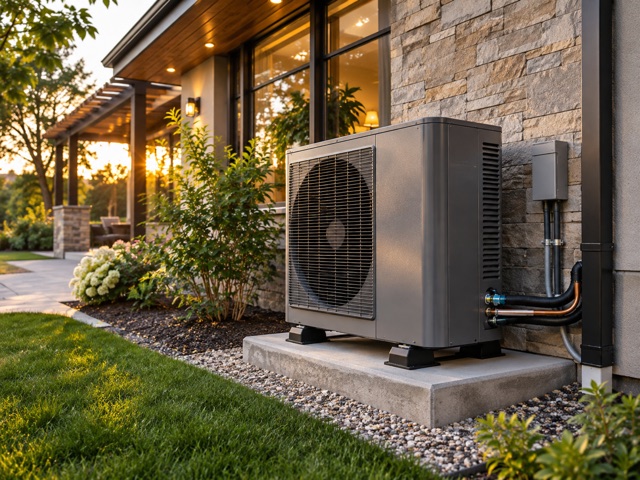
Compare heating and cooling options with your home in mind.
Explore installation
Plan seasonal care for the equipment you rely on.
Explore maintenanceStart with what you’ve noticed at home, whether your system needs attention, replacement or seasonal care.
4 photos
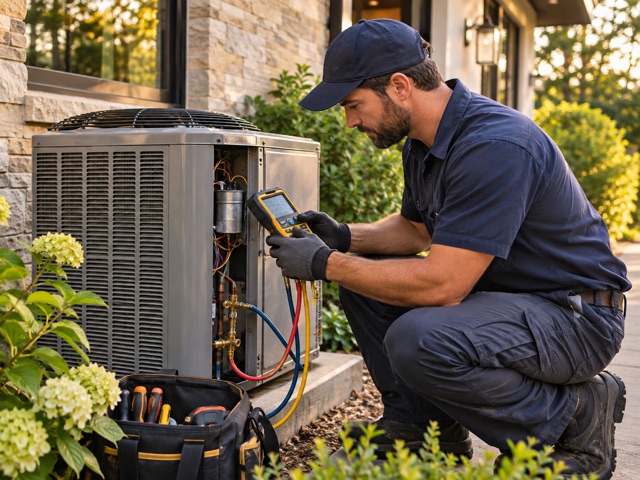
A close view of an outdoor heat pump and its line connections.
An outdoor heat pump on a concrete base beside a stone-clad home.
A wall control in a naturally lit living space.
A technician examines a pleated filter at an indoor air handler.
Understand what you’re noticing at home, prepare for a service visit, and compare cooling efficiency.

Room temperatures can differ when heat gain, heat loss, or airflow varies across the home.
Sun exposure, insulation, drafty windows, and duct problems can all affect how a room feels. The pattern matters. A room that warms up every afternoon gives a contractor a different clue from a room that feels uncomfortable whenever the system runs.
Its location and schedule can influence when the system runs. Note whether its reading seems representative of the rooms you use.
Weak airflow alone cannot establish equipment size. Ask about the filter, ducts, and air distribution before drawing a conclusion.
Keep registers in their usual positions and describe the imbalance. Ask a contractor before changing how the system distributes air.
Bring the equipment details, repair history, and any written quotes you already have.
A useful comparison starts with the same information on both sides. Ask what caused the fault, what the repair would address, and what is included in a replacement proposal. Age and repair frequency are context for the discussion, and the condition of the system needs a professional assessment.
Use the quote you have and write down the items you still need. The guide supports a comparison with either cost left blank.
Compare what each price includes, such as labor, controls, removal, or duct work. Ask for clarification on items that appear in only one proposal.
Use paperwork or an accessible exterior label. Leave cabinet access, electrical testing, and refrigerant work to a qualified technician.
A technician checks condition and operation, then explains any findings and follow-up work.
The scope depends on the equipment and the visit you arrange. A professional may review controls and airflow, inspect applicable coils or drains, and check safe operation. Ask what is included before the visit and request a written summary afterward.
Follow the equipment manual for a homeowner-accessible filter. Ask the technician to show you the correct procedure if access is unclear.
No. Heating and cooling equipment have different components, and the agreed service scope determines what is included.
Ask what was checked, what they found, what action is needed, and when they recommend the next visit.
An electric heat pump moves heat. A reversible air-source system can heat the home and provide cooling.
In heating mode an air-source heat pump takes heat from outdoor air and moves it indoors. In cooling mode it moves heat outdoors. A contractor can compare ducted or ductless options based on climate, the home’s heating and cooling needs, equipment placement, and the existing electrical and air distribution systems.
Some models are designed for cold conditions. Ask about capacity at your local design temperature and how any backup heat would operate.
Ducted and ductless air-source options exist. The right configuration depends on which spaces it serves and what can be installed in the home.
Have a contractor assess the ducts for condition, airflow, and suitability for the proposed equipment.
Indoor sources, ventilation, filtration, and moisture all affect the air in a home.
Address sources of pollutants and excess moisture first. Ventilation can help dilute pollutants, and suitable filtration can capture some airborne particles. A filter alone cannot resolve a leak or a moisture source. Talk through the pattern you observe before buying equipment.
Ask which filter the equipment can accommodate. A filter must fit correctly and allow the airflow the system requires.
Identify and address the moisture source. Filtration can supplement other measures but does not fix leaks or condensation.
Describe which rooms are affected, what you notice, and whether the pattern changes when the fan or cooling system runs.
SEER2 describes seasonal cooling efficiency. HSPF2 describes seasonal heating efficiency for heat pumps.
Both ratings express seasonal output per watt-hour under defined test conditions. Compare cooling ratings on the same SEER2 basis and heating ratings on the same HSPF2 basis. Older SEER and HSPF values use a different test procedure. A rating alone cannot predict a household bill.
Use SEER2 for both inputs. If an older label only shows SEER, ask for a comparable SEER2 rating before using the tool.
It models cooling only. Heating costs depend on different ratings and assumptions, including any backup heat.
A bill reflects weather, usage, rates, other electricity loads, and how equipment actually performs in the home.
Mark each item as you prepare for a visit. Leave electrical work, refrigerant service, and safety controls to a qualified technician.
If you suspect a gas leak or a carbon monoxide alarm sounds, leave immediately and contact the appropriate emergency service from a safe location. Use this checklist for routine maintenance only.
0 of 6 items complete. Saved in this browser.
Compare two SEER2 ratings under the same cooling demand. Enter a published SEER2 rating from 8 to 35 for each system. This is the explorer’s supported comparison range. Older SEER ratings use a different test procedure.
Assumes the same cooling demand and electricity price. Actual bills depend on climate, equipment sizing, installation, usage and rates.
Estimated proposed cooling energy as a share of current cooling energy equals current SEER2 divided by proposed SEER2. If you enter a cost, the model multiplies that cost by the ratio to estimate the proposed annual cost. The monthly difference is the annual difference divided by 12.
The comparison holds cooling demand and electricity price constant. Actual performance depends on climate, equipment sizing, installation, usage, and other factors. The monthly figure is an annual average across all months.
Ready to discuss a service?
Try the quote simulator